

Reviewed by EM-I-CLEAR
This is an official EM-I-CLEAR translation. Under CC BY-NC-ND 4.0 we do not permit adaptations; where a translation is needed, EM-I-CLEAR provides a reviewed translation directly, not a loose one.
EM-I-CLEAR (Emergency Medicine Initiative for Clinical Learning, Education, Artificial Intelligence, and Research) is a nonprofit research collaborative that produces evidence-based educational resources to support emergency care for children and adolescents. We believe that the care a child receives changes when clinicians in practice and caregivers at home share the same evidence, so we publish, side by side, resources meant to guide clinicians’ initial management and resources that help patients and caregivers understand initial care and emergency situations. This resource is part of that effort. If you share this direction, you are welcome to join us at [email protected].
- This document summarizes domestic and international literature that may help inform clinical care on the topic above. It is an educational resource for physicians and other healthcare professionals.
- The content was prepared as of August 2026.
- This resource does not precede the treating clinician’s clinical judgment for an individual patient, and its use in actual practice is at the clinician’s discretion.
- Resources on this site provide general education and do not replace individual diagnosis or treatment. In an emergency in the Republic of Korea, call 119 or go to the nearest emergency department.
- We hope this resource is useful in clinical practice. If you find an error or omission, please let us know at [email protected] so we can incorporate it into a revision — this is a significant help in making a better resource.
Scope of this resource — This resource covers pediatric and adolescent burns, from prehospital and home first aid through emergency department evaluation and treatment, and referral decisions. Its focus is thermal burns; inhalation injury and electrical and chemical burns are addressed mainly through the exceptions that require immediate referral. It is written for reference in pediatric and adolescent emergency practice and to teach general practitioners, residents, and medical students. Surgical management, reconstruction, and long-term rehabilitation performed at specialist burn centers are not covered.
Time-ordered flow of care
The table below arranges the recommendations in the order care is delivered. The evidence and exceptions for each step are in the corresponding recommendation in the body of the document.
| Time point | What to do | Reference |
|---|---|---|
| Scene / home | Running tap water for 20 minutes · the burn area only · use nothing but water · after cooling, cover loosely with tap-water-moistened gauze or cling film | Rec. 1–6 |
| Decision to call 119 or present for care | Difficulty breathing · hoarse voice · difficulty speaking or swallowing · drooling · burns to the face, nose, or mouth · heavy smoke inhalation · electrical injury · chemical burn · extensive burns | Rec. 7 |
| On arrival ① Airway | Check for danger signs → if present, prepare immediately to secure the airway | Rec. 8 |
| On arrival ② Shock | Check for signs of poor perfusion — shock is possible even with normal blood pressure. If shock is a concern, give crystalloid 20 mL/kg immediately | Rec. 9 · 12 |
| Warming (at every stage) | Prevent hypothermia — cool the burn area only · moistened gauze from home to hospital, dry covering for transfer from the emergency department | Rec. 4 · 6 · 14 |
| Depth and area | Determine depth (exclude 1st degree from the calculation) → %TBSA using an age-adjusted chart | Rec. 10 · 11 |
| Analgesia | Age-appropriate assessment tool → stepwise analgesics, together with nonpharmacologic methods | Rec. 13 |
| Fluids | If not in shock, decide by %TBSA · the calculated value is a starting point and is adjusted by urine output | Rec. 12 |
| Wound care | Cleansing and selective debridement → dressing · keep small, intact blisters | Rec. 14 |
| Infection / tetanus | Do not give prophylactic systemic antibiotics · assess the need for tetanus prophylaxis | Rec. 15 |
| Investigations | Usually not needed for straightforward burns · selective for house fires, electrical injury, and associated trauma · for chemical injury, consultation before investigation | Rec. 16 |
| Referral / admission / discharge | Check the two-tier referral criteria → tell discharged patients to have a re-assessment within 24 hours | Rec. 17 |
| At every stage | If the history does not match the injury pattern, assess for abuse | Rec. 18 |
Summary of recommendations
| Section | # | Recommendation |
|---|---|---|
| Scene / home first aid |
1 | For pediatric thermal burns, we suggest starting cooling with running cold (tap) water immediately after injury |
| 2 | We suggest cooling for 20 minutes. This may be done cumulatively across several sessions to reach a total of 20 minutes | |
| 3 | Even if time has passed without cooling, we suggest cooling if it is still within 3 hours of injury | |
| 4 | We suggest cooling the burn area only. We do not suggest wetting or showering the whole body; use caution regarding hypothermia in infants and extensive burns | |
| 5 | Do not apply ice, ice water, toothpaste, aloe vera, ointment, or anything other than water to the burn. Do not deliberately rupture blisters | |
| 6 | After cooling, we suggest covering loosely with clean tap-water-moistened gauze or cling film. Cling film is not suggested for the face | |
| 7 | If difficulty breathing, hoarse voice, difficulty speaking or swallowing, drooling, burns around the face/nose/mouth, heavy smoke inhalation, electrical injury, a chemical burn, or an extensive burn is present, we suggest advising the caregiver to call 119 or go immediately to an emergency facility | |
| Emergency department initial assessment |
8 | If any one of stridor, hoarse voice, drooling, respiratory distress, significant facial burns, or altered mental status is present, we suggest preparing immediately to secure the airway. Singed nasal hairs alone cannot consistently determine the need for mechanical ventilation |
| 9 | Shock is possible even with normal blood pressure. If tachycardia, altered mental status, delayed capillary refill, or decreased urine output is present, we suggest acting immediately rather than waiting to measure blood pressure | |
| Depth and TBSA |
10 | We suggest determining burn depth, and excluding 1st-degree burns from the TBSA calculation |
| 11 | We suggest determining TBSA with an age-adjusted Lund–Browder chart | |
| Fluids | 12 | We suggest checking for shock first, and if not in shock, determining fluids by TBSA. If shock is a concern, give crystalloid 20 mL/kg. Fluid resuscitation is generally not required below 15% TBSA. Children under 30 kg need dextrose-containing maintenance fluid — add it separately when using a weight-based formula, and check for overlap when using a TBSA-based formula |
| Pain and sedation | 13 | We suggest using an age-appropriate pain assessment tool and giving stepwise analgesia by severity. Combine with nonpharmacologic methods. Procedural sedation doses are in Appendix A |
| Wounds and blisters | 14 | We suggest wound care by cleansing and selective debridement, then dressing. Keep small, intact blisters unruptured |
| 15 | We do not suggest prophylactic systemic antibiotics. We suggest assessing the need for tetanus prophylaxis in every patient | |
| Investigations | 16 | We suggest not routinely obtaining investigations for straightforward burns, and selecting investigations by mechanism for house fires, electrical injury, and associated trauma. This resource does not specify investigations for chemical injury; we suggest immediate consultation with a burn center and following substance-specific poison control guidance |
| Referral / admission / discharge |
17 | If referral criteria are met, we suggest referral to a specialist burn center, and re-assessment within 24 hours for pediatric burns discharged from the emergency department |
| Abuse | 18 | If the history is inconsistent with the injury pattern, we suggest assessing for abuse, and fulfilling the legal duty to report if abuse is suspected |
I. Background
Pediatric burns mostly occur at home, often from hot water or hot food, and are most common in children 3–4 years of age or younger(1). UK data report that each year in England and Wales, about 25,000 children attend an emergency department with a burn, roughly 3,800 are admitted, and 70% occur at home(2). Findings in Korean sources are similar(1,3).
First aid delivered at home affects the subsequent course of treatment. In an Australian cohort that prospectively enrolled 2,495 children, those who received adequate first aid (cool running water for 20 minutes) had lower odds of skin grafting than those who did not — odds ratio (OR) 0.6 (95% CI 0.4–0.8)(4). Adequate first aid, however, is reportedly delivered infrequently. In a study of 500 children each at pediatric emergency departments in the UK and the US, first aid consistent with local recommendations had been given to only 26% and 6% of children respectively, and potentially harmful substances (toothpaste, oil, ice, and others) had been applied in 5–10% of cases(5). A study comparing the first-aid guidance published by 21 UK health organizations found that advice on cooling duration and method was inconsistent between organizations(2). The Faculty of Pre-Hospital Care and British Burn Association consensus statement (2019) identified methods for raising caregiver awareness of pediatric burn management as an unresolved research question(6). Caregiver-delivered first aid, and clinician education toward that end, are therefore both important.
II. Recommendations
II-A. Scene and home first aid
Recommendations 1–7 are content that clinicians should teach so caregivers can carry them out at the scene.
Recommendation 1. We suggest starting cooling with running cold water immediately after injury
For pediatric thermal burns, we suggest starting cooling with running cold (tap) water immediately after injury.
Explanation
- Water can be run directly over clothing. Do not spend time undressing the child; do not forcibly remove clothing that is stuck to the burn — run water over it to cool the composite layer(1,3). Remove rings, bracelets, and other jewelry before swelling develops.
- Immersion in a basin of still water is not suggested. Standing water warms as soon as it absorbs heat and quickly loses its cooling effect, so continuous heat removal requires running water.
- There is no scientifically supported specific temperature target for the water(7). In practice, room-temperature tap water is used. There is no evidence that a colder temperature is more beneficial.
Evidence summary
The International Liaison Committee on Resuscitation (ILCOR) issued a strong recommendation in 2015 for immediate cooling of thermal burns (strong recommendation, low-quality evidence)(7). In an Australian pediatric cohort study (n=2,495), cool running water first aid was associated with reduced skin grafting (OR 0.6, 95% CI 0.4–0.8), reduced progression to full-thickness burns (0.4, 0.2–0.6), reduced admission (0.7, 0.5–0.9), and reduced procedures in theatre (0.7, 0.5–0.9)(4). On the temperature of the cooling water, the European Resuscitation Council (ERC) 2021 guideline states that “there are no scientifically supported recommendations for the specific cooling temperature” (7), while the UK prehospital consensus proposed less than 20 °C (optimal about 12 °C) (evidence level Ib)(6) — the recommended figures are not consistent across the literature.
Recommendation 2. We suggest cooling for 20 minutes
We suggest cooling for 20 minutes. If continuous cooling is not possible, cumulative cooling totaling 20 minutes is acceptable.
Explanation
- Tell caregivers explicitly that this does not mean “20 minutes in one go” — cumulative cooling across several sessions totaling 20 minutes is acceptable. If cooling is interrupted, advise resuming for the remaining time.
- There is no evidence that cooling for longer than 20 minutes is more beneficial.
- When taking a history, ask not “did you cool it with water?” but “for how many minutes?” In the cohort study cited above, 90.6% of caregivers used water, but only 71.3% reached 20 minutes(4).
Evidence summary
A review comparing 18 international guidelines found that 11 (including all 7 Australian and New Zealand guidelines) recommend at least 20 minutes of cooling(8). The ERC’s 2015 guideline suggested a minimum of 10 minutes, but the 2021 revision extended this to a minimum of 20 minutes; this is classified not as a recommendation based on a systematic review but as a good practice point(7). The UK prehospital consensus statement gave 20-minute cooling a Grade B recommendation(6).
The evidence on cooling duration itself is not consistent across systematic reviews. An ILCOR systematic review (2022) evaluated 4 observational studies with GRADE and found “no benefit for a duration of 20 min or more of cooling when compared with less than 20 min”, rating the certainty of the evidence as very low(9). In contrast, another systematic review and meta-analysis from the same year (7 studies, n=11,383) supported 20-minute cooling on the basis of reduced skin grafting (OR 0.54, 95% CI 0.44–0.67)(10). This difference stems from the tools used to appraise the evidence (GRADE and Downs and Black — two different ways of grading the certainty of evidence, which treat observational studies differently) and from differences in inclusion criteria; neither review directly compared 20 minutes with a shorter duration(9,10). This recommendation follows the conservative threshold used by most international guidelines; it does not mean that 20 minutes has been proven to be optimal.
Recommendation 3. We suggest cooling if still within 3 hours of injury
Even if time has passed without cooling, we suggest cooling if it is still within 3 hours of the injury.
Explanation
- Starting cooling within 10 minutes of injury is ideal(6). However, for a patient who arrives without having been cooled, we suggest cooling in the treatment room if it is still within 3 hours of injury, because a benefit from cooling has been observed up to 3 hours(4,6).
- Caregivers sometimes give up on cooling because they believe “too much time has already passed” — explain that cooling is still worthwhile even for a late presentation.
Evidence summary
In animal-model studies, the group cooled for 20 minutes immediately after injury showed the greatest improvement in re-epithelialization and the shallowest burn depth, and benefit was still observed after delays of up to 3 hours(4). The UK prehospital consensus statement also describes cooling as effective up to 3 hours after injury, while stating that it should be started as soon as possible, ideally within 10 minutes (evidence level III)(6).
Recommendation 4. We suggest cooling the burn area only
We suggest cooling the burn area only. We do not suggest wetting or showering the whole body; use caution regarding hypothermia in infants and extensive burns.
Explanation
- Cool only the burn area; wetting the child’s entire body or showering to cool is not suggested. When covering with a wet cloth, cover only the burn area.
- Even in extensive burns, cooling comes first. Because the area being cooled is inevitably larger, pay particular attention to hypothermia and cool the burned area only. It has been noted that the risk of hypothermia and delay in transfer may outweigh the benefit of cooling(11).
- We do not suggest arbitrarily shortening the cooling time in infants out of concern for hypothermia. The identified risk factor for hypothermia was not cooling duration but the extent of the area cooled(9).
Evidence summary
Children are more vulnerable to hypothermia because of their large body surface area relative to weight(3,6). In an observational dataset of 117 children under 5 cooled with water, hypothermia or shivering was identified in 5 children, and 4 of those 5 had received whole-body cooling in a shower(9). The UK prehospital consensus statement states that cooling itself does not appear to directly contribute to hypothermia, while still recommending temperature monitoring and active warming during cooling (evidence level III)(6). The ERC 2021 guideline also specifies that care must be taken to avoid inducing hypothermia when cooling extensive burns and burns in infants and young children(7).
Recommendation 5. Do not apply anything other than water, and do not rupture blisters
Do not apply or place anything other than water — including ice, ice water, and toothpaste, aloe vera, ointment, butter, cream, and similar substances — on the burn. Rubbing the burn or deliberately rupturing blisters is also not suggested.
Explanation
- Ice is not suggested because it can itself cause tissue damage.
- There is no need to deliberately rupture blisters. No large comparative study establishes a firm conclusion on blister management, but an already-ruptured blister should have its necrotic tissue removed(1).
Evidence summary
Of 18 international guidelines, 13 advise against using ice, and there is general consensus against using ointments or folk remedies as first aid(8). Ice water (<8 °C) has been reported to increase tissue necrosis and was therefore recommended against in the UK prehospital consensus statement (evidence level Ib)(6). Korean sources explain that ice can cause vasoconstriction and impair circulation(1). Potentially harmful substances (toothpaste, oil, ice, and others) were found to have been applied in 5–10% of children actually presenting to pediatric emergency departments(5).
Recommendation 6. After cooling, we suggest covering loosely with clean moist gauze or cling film
After cooling, we suggest covering the burn loosely with clean gauze or cloth moistened with tap water, or with cling film. Cling film is not suggested for the face.
Explanation
- Guide caregivers first toward the method familiar in Korea (clean gauze or a handkerchief moistened with tap water), and present cling film as an available alternative(1,3). Cling film is a practical alternative because gauze is often not available at home.
- Cling film protects the wound, reduces heat and evaporative loss, and eases pain. It also allows the wound to be observed without removing it(7).
- Advise that it should not be wrapped tightly. Because swelling may progress, it should be draped loosely rather than wound around the limb.
- No evidence shows that one dressing is superior to another(7).
- Wet and dry coverings differ by the point in care. ① During cooling, keep it wet ② From home to the hospital immediately after cooling, cover with tap-water-moistened gauze or cling film — this is the method described in Korean sources(1,3). ERC’s public-facing guidance gives, at this same point, a dry sterile dressing or cling wrap, so the two sources diverge(7). ③ When transferring from the emergency department, keep the covering dry — to prevent hypothermia during transport(11). See Recommendation 14.
Evidence summary
There is general international guideline agreement on covering after cooling with a non-adherent dressing, a clean cloth, or cling film(8). The ERC 2021 guideline specifies a dry sterile dressing or cling wrap in its lay first-aid instructions, and its task force discussion described cling wrap as useful for wound protection, reducing heat and evaporative loss, easing pain, and allowing wound observation, with an extremely low risk of infection(7). At least one guideline explicitly states that cling film should not be used on facial burns(8).
Recommendation 7. We suggest advising a 119 call or immediate presentation if danger signs are present
If any of the following are present, we suggest advising the caregiver to call 119 (Korea’s emergency number) or go immediately to an emergency facility.
- The child appears to have difficulty breathing, or has inhaled a large amount of smoke
- Hoarse voice, difficulty speaking or swallowing, or drooling
- A burn around the face, nose, or mouth
- An electrical injury
- A chemical burn
- An extensive burn involving much of the body
Explanation
- For electrical injury, advise the caregiver to confirm that the power is disconnected before touching the child — the caregiver can also be electrocuted(1).
- If vital signs are unstable or deterioration during transport is a concern, prioritize transport via 119. Triage at the 119 dispatch stage, through prenotification, lets the emergency department prepare airway management, analgesia, and warming before the patient arrives(12).
- There is no quantitative threshold for “a large amount of smoke inhalation.” This item is not a diagnostic criterion — it is worded as guidance signaling that immediate care may be needed.
- Advise immediate presentation for any chemical burn, regardless of type or extent. The irrigation method and observation time depend on the substance, and caregivers cannot determine this at home.Appendix B-18
- Singed nasal hairs or eyebrows are a reference finding for assessment and referral but are not included in caregiver-facing guidance.
Evidence summary
The National Fire Agency’s 119 Emergency Dispatch Center Counseling Manual (2018) lists, as urgent-tier criteria for burns at the dispatch stage: unconsciousness or apnea, decreased consciousness, difficulty breathing, difficulty speaking or swallowing, burns to the airway, nose, or mouth, burns of 15% or more of body surface area, chemical burns to the eye, and lightning or electrical burns(13). Airway danger signs and their evidence are summarized in Recommendation 8 — the signals given to caregivers (this recommendation) are distinguished from the indications for emergency department airway management (Recommendation 8). All electrical injuries should be transported via 119 or to an emergency facility; even at domestic low voltage, two or more electrical contact marks raise the possibility that current passed through the heart, warranting inpatient observation(1).
II-B. Emergency department initial assessment — airway and shock
Recommendation 8. We suggest preparing immediately to secure the airway if danger signs are present
If any one of stridor, hoarse voice, drooling, respiratory distress, significant facial burns, or altered mental status is present, we suggest preparing immediately to secure the airway. Singed nasal hairs alone cannot consistently determine the need for mechanical ventilation.
Explanation
- The pediatric airway is vulnerable enough that 1 mm of edema can halve its diameter and increase airway resistance 16-fold(11). 4–5% of children with scald burns require mechanical ventilation(11).
- Stridor and hoarse voice are danger signs requiring immediate airway management, and drooling, respiratory distress, significant facial burns, and altered mental status are also described as findings that suggest the need for definitive airway management (e.g., endotracheal intubation)(11).
- A historical teaching has equated nasal soot or singed nasal hairs with the need for immediate intubation, but these findings are not consistently indicative of need for mechanical ventilation(11). Distinguish signals for referral and assessment from the indications for airway management.
- Also assess for shock at this same stage. The indication and dose for a bolus are in the table in Recommendation 12.
Evidence summary
The above list of signs and the vulnerability of the pediatric airway (a 50% reduction in diameter and a 16-fold increase in resistance with 1 mm of edema) come from a pediatric emergency medicine review, whose original text describes stridor and hoarse voice as ominous signs(11). The urgent-tier criteria at the domestic 119 dispatch stage are summarized in the evidence for Recommendation 7.
Recommendation 9. We suggest acting on signs of shock without waiting to measure blood pressure
Shock is possible even with normal blood pressure. If signs of poor perfusion are present, we suggest acting immediately rather than waiting to measure blood pressure to confirm hypotension.
Explanation
- Shock severity is classified by systolic blood pressure. When compensatory mechanisms keep systolic pressure at or above the age-based 5th percentile, this is compensated shock; when compensatory mechanisms fail and systolic pressure falls, this is hypotensive shock (previously termed “decompensated”)(14).
- Compensated shock is easy to miss — signs of poor perfusion are present while blood pressure remains within the normal range. The findings are tachycardia, altered mental status, delayed capillary refill, and decreased urine output(14).
- Hypotensive shock progresses rapidly to cardiac arrest if not corrected. Distal pulses are absent or weak, and central pulses are also weak, with cold extremities, mottled skin, or altered mental status(14). The progression from compensated to hypotensive shock can take hours, but the progression from hypotensive shock to cardiac arrest takes minutes(14).
- Palpate the pulse before trusting an automated blood pressure cuff. An automated cuff is accurate only when distal perfusion is adequate — if a distal pulse cannot be palpated and limb perfusion is poor, do not trust the automated reading and rely on clinical assessment instead(14).
- The bolus and dose to give when shock is a concern are in the table in Recommendation 12.
Compensatory mechanisms and the signs they produce
| Compensatory mechanism | Where | What is seen |
|---|---|---|
| Increased heart rate | Heart | Tachycardia |
| Increased systemic vascular resistance | Skin | Cold, pale, mottled, and sweaty |
| Peripheral circulation | Delayed capillary refill | |
| Pulse | Peripheral pulses weaken and pulse pressure narrows (diastolic pressure rises) | |
| Increased splanchnic/renal vascular resistance | Kidney | Decreased urine output |
| Bowel | Vomiting, ileus | |
| Cerebral autoregulation | Brain | Altered mental status, anxiety/agitation, disorientation, decreased consciousness, coma |
Numeric threshold for hypotension — systolic blood pressure by age
| Age | Hypotension (systolic BP) |
|---|---|
| Neonate (0–28 days) | Below 60 mmHg |
| Infant (1–12 months) | Below 70 mmHg |
| 1–10 years | Below 70 + (age × 2) mmHg |
| Over 10 years | Below 90 mmHg |
This value is the age-based 5th percentile mentioned above — a systolic blood pressure lower than all but 5% of normal children. Conversely, 5% of healthy children also fall below this threshold, so the number alone should not be used to make the diagnosis.
⚠️ This threshold was established in “normal children at rest.” The source states that “children with injury and stress tend to have higher blood pressure, so even a blood pressure at the low end of the normal range can be an ominous sign in a critically ill child”(14) — this describes burn patients precisely. A 10 mmHg drop in systolic pressure from baseline alone is reason enough to evaluate for other signs of shock(14).
Hypotension with bradycardia carries a poor prognosis(14). The clinical signs above come first; this number is a confirmatory tool.
Evidence summary
The content above comes from the “Recognizing Shock Severity” section and compensatory-mechanism table of a Pediatric Advanced Life Support (PALS) provider manual(14). The source states: “Shock is a continuum of severity, and the presence of signs and symptoms of shock is reason enough to act immediately rather than waiting for a direct blood pressure measurement to confirm hypotension.” The age-based hypotension definition table is in the same manual’s “Assessment” unit, in the primary survey — circulation section, and is a general definition not limited to a specific cause(14). The copy obtained is a Spanish-language edition, and its publication year could not be verified — the text states that it reflects the 2020 American Heart Association guidelines.Appendix B-19
II-C. Burn depth and total body surface area
Recommendation 10. We suggest determining burn depth and excluding 1st-degree burns from the TBSA calculation
We suggest determining burn depth. 1st-degree (superficial) burns are not included in the TBSA calculation.
Explanation
The area to include in a TBSA calculation depends on depth, so depth is determined first. The degree terminology familiar in Korea (1st, 2nd, and 3rd degree) corresponds to the depth terms used in the literature as follows(15).
| Degree | Depth term | Exam findings | Included in TBSA |
|---|---|---|---|
| 1st degree | superficial | Dry and red, blanches easily with pressure. Pain may or may not be present (e.g., sunburn) | Not included |
| 2nd degree (superficial) | superficial partial thickness | Moist and red, blanches. Blisters form. Very painful | Included |
| 2nd degree (deep) | deep partial thickness | Drier, paler at rest, blanches less with pressure. Less painful | Included |
| 3rd degree | full thickness | Dry, leathery texture, variable color (white, brown, black). Loss of pinprick sensation | Included |
In this document, partial thickness refers to 2nd degree and full thickness refers to 3rd degree. Note that pain and blanching decrease with increasing depth — less pain does not mean a milder burn.
- 1st-degree (superficial) burns are not included in the TBSA calculation(15) — counting a purely erythematous area (e.g., sunburn) overestimates the true extent.
Evidence summary
The four-tier exam findings and the exclusion of 1st-degree burns from TBSA both come from the “Burn Severity Determination” section of the American Burn Association’s referral guideline(15). The source describes 1st degree as “dry, red, easily blanching” and 3rd degree as “dry, leathery texture, variable color, loss of pin prick sensation”(15).
Recommendation 11. We suggest determining TBSA with an age-adjusted Lund–Browder chart
We suggest determining a child’s TBSA with an age-adjusted Lund–Browder chart.
Explanation
- We suggest using an age-adjusted Lund–Browder chart in children(11,15). The chart below can be used.
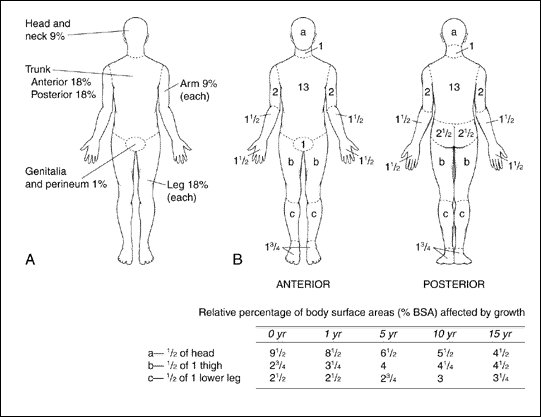
How to read the chart above
- Every number on the chart is a percentage of total body surface area (%TBSA). The front and back numbers together sum to 100%.
- A is the adult rule of nines; B is the age-adjusted pediatric chart.
- The numbers printed in B — neck 1, trunk front/back 13 each, upper arm 2, forearm 1½, hand 1½, genitalia 1, buttock 2½, foot 1¾ — are fixed regardless of age. Values for paired regions are per side.
- Only a (½ of the head), b (½ of one thigh), and c (½ of one lower leg) change with age. Use the value for the relevant age from the table below. Adult values are not printed on this chart; they are a 3½ · b 4¾ · c 3½(16).
- Why the
½— the head is divided front/back, and each thigh and lower leg is divided into anterior and posterior surfaces with left and right limbs counted separately, so eachborccell represents one of four limb surfaces. So if the entire head is burned, add a twice (front + back), and if both thighs are burned, add b four times (left + right × front + back).Assessment procedure — ① mark the burn on the chart. ② do not mark 1st-degree areas (erythema only, blanches with pressure). ③ for a cell that is only partially burned, multiply the cell’s value by the burned fraction (e.g., half the front trunk is 13 × ½ ≈ 6.5). ④ sum all marked values.
Source: REMM/HHS (US Department of Health and Human Services, Radiation Emergency Medical Management). A US federal government work, in the public domain, reproduced unaltered.
| Age-adjusted values (%) | 0 yr | 1 yr | 5 yr | 10 yr | 15 yr | Adult |
|---|---|---|---|---|---|---|
| a — ½ of the head | 9½ | 8½ | 6½ | 5½ | 4½ | 3½ |
| b — ½ of one thigh | 2¾ | 3¼ | 4 | 4¼ | 4½ | 4¾ |
| c — ½ of one lower leg | 2½ | 2½ | 2¾ | 3 | 3¼ | 3½ |
Ages not listed (e.g., 2 or 7 years) are not determined from this chart. The original chart itself gives no guidance for intermediate ages. Rounding to an adjacent column without a basis over- or under-estimates TBSA — see Appendix B-10. In that situation, view the values of the adjacent age columns as a range, and this resource does not specify which way to round. If that range straddles the 15% fluid-calculation threshold or the 10% threshold for immediate consultation with consideration for transfer in partial-thickness burns, do not finalize the decision from this resource alone — follow the institution’s pediatric burn calculation tool or the judgment of a specialist burn center.
- The rule of nines can be used from memory, without a chart, which makes it useful at the scene and for initial assessment. It can be used directly in adolescents and adults, but it does not accurately represent a child’s body surface proportions(11) — children have relatively larger heads and smaller legs. A pediatric-adjusted variant of the rule of nines exists separately(11,15).
| Region | Adult (rule of nines) | Difference in a child (age 0) |
|---|---|---|
| Head (excluding neck) | Rule of nines gives head + neck as 9% | Much larger — about 19% (a 9½ × 2 surfaces). Adding neck 1% gives 20% |
| Arm (one side) | 9% | Not substantially different from an adult |
| Leg (one side, including foot) | 18% | Smaller — about 12% (thigh b 2¾ × 2 surfaces + lower leg c 2½ × 2 surfaces + foot 1¾) |
| Trunk, front | 18% | Allocated differently — the chart gives 13 |
| Trunk, back | 18% | Allocated differently — the chart gives 13 |
| Perineum/genitalia | 1% | 1% |
Do not mix values from the two methods — some regions, such as the trunk, are allocated differently between the two methods, so combining them in one patient will not sum correctly. Choose one method and use it consistently.
Working out the same calculation with adult values, one leg is thigh 4¾ × 2 surfaces + lower leg 3½ × 2 surfaces + foot 1¾ = about 18%, matching the rule of nines. However, this agreement is limited to the leg — regions like the trunk, where the allocation itself differs, give different values under the two methods even in adults (table above).
- In practice, use it this way — estimate roughly with the rule of nines at the scene and for initial assessment, and redetermine using the age-adjusted chart for decisions about admission, transfer, and fluids. Using the rule of nines alone in children underestimates head burns and overestimates leg burns.
- The palmar method — when no chart is available, the area of the patient’s own palm (fingers adducted) is taken as approximately 1%, to estimate scattered small burns. This method, however, tends to overestimate %TBSA in adults and underestimate %TBSA in children(11). The value differs depending on whether the palm alone or the palm with fingers is used, so it is best to standardize this within the institution(15).
- In practice, patients transferred to a specialist burn center frequently have an overestimated TBSA from the referring facility, which can lead to unnecessary transfers and excessive fluid administration(11).
Evidence summary
The American Burn Association’s referral guideline states that the rule of nines is “most accurate for adults. For children and infants, adjustments (such as the Lund and Browder chart) are recommended due to different body surface proportions”(15). That 1st-degree burns are “not counted” in the TBSA calculation is also stated in the same document(15). This does not mean the rule of nines should not be used at all; the source review explicitly notes that a pediatric-adjusted variant of the rule of nines exists(11). The age-adjusted values in the chart come from the original 1944 paper by Lund and Browder, and the adult values, which are not printed on this chart, were cross-checked in a separate publication(16).
The two sources diverge on the palmar method. The review states that this method “can overestimate %TBSA in adults and underestimate %TBSA in children”(11), while the American Burn Association document notes that the value varies from 0.8–1% depending on whether the palm alone or the palm with fingers is counted, and concludes that institutions should clarify which reference is being used(15). Neither source treats the palmar method as a primary assessment method.
The accuracy of TBSA determination is described as a real problem in two places by the same author — TBSA carried over from a referring facility is frequently overestimated, leading to unnecessary transfers and inappropriate fluid resuscitation, and the tendency to overestimate in children contributes to excessive fluid administration(11). This recommendation is not itself a treatment, but it underlies decisions about fluids and referral.
II-D. Fluids
Recommendation 12. We suggest checking for shock first, and if not in shock, determining fluids by TBSA
Fluid resuscitation is generally not required for burns under 15% TBSA. At 15% TBSA or more, we suggest calculating and giving a 24-hour fluid deficit, with dextrose-containing maintenance fluid added for children under 30 kg.
Explanation
This is a two-branch decision — first check for shock, and if not in shock, decide by burn extent.
| State | What | How much | |
|---|---|---|---|
| ① Is it shock? | Hypovolemic shock is a concern | Crystalloid bolus — Ringer’s lactate is preferred over 0.9% normal saline(11) | 20 mL/kg, immediately, during the primary survey (the initial assessment focused on finding life-threatening problems)(11) |
| ② If not in shock — what is the TBSA? |
Under 15% | Fluid resuscitation is generally not required. If IV fluid is given, use a crystalloid (0.9% normal saline or Ringer’s lactate) | May be limited to 1.5× maintenance rate(11) |
| 15% or more | Calculate a 24-hour fluid deficit | 2–4 mL/kg/%TBSAAppendix B-16 — formulas in the table below | |
| ③ Check together | Weight under 30 kg | Dextrose-containing maintenance fluid | Added separately when using a weight-based formula (Parkland, ATLS). For the 1.5× maintenance rate under 15%, or for Galveston/Cincinnati, check whether maintenance is already included to avoid double-counting |
| Marker for titration | Urine output | 0.5–1 mL/kg/h(11) |
Amount of maintenance fluid — the source literature states only that “dextrose-containing maintenance fluid should be given together” and does not provide a calculation method. In practice, Holliday–Segar (4-2-1) is used to determine the hourly maintenance rate.Appendix B-14
| Weight band | Hourly maintenance rate |
|---|---|
| First 10 kg | 4 mL/kg/h |
| Next 10 kg (10–20 kg) | +2 mL/kg/h |
| Above 20 kg | +1 mL/kg/h |
Example: 15 kg → (10 × 4) + (5 × 2) = 50 mL/h. When using a weight-based formula (Parkland, ATLS) in a child under 30 kg, give this maintenance rate as dextrose-containing fluid, calculated separately from the deficit above. When using Galveston or Cincinnati, check whether maintenance is already included before calculating, to avoid double-counting.
Conversion example — 15 kg, 20% TBSA, no shock ① 24-hour deficit = 4 × 15 × 20 = 1,200 mL ② half of that, 600 mL, is planned for the first 8 hours → start at 75 mL/h ③ because the child is under 30 kg, add dextrose-containing maintenance fluid at 50 mL/h separately ④ after that, titrate by urine output at 0.5–1 mL/kg/h (about 8–15 mL/h in this patient). These values are a starting point — do not halve the rate simply because 8 hours have passed.
⚠️ Check to avoid double-counting. The maintenance fluid above is added separately only when using a weight-based formula (Parkland, ATLS). For formulas that include a TBSA term, whether that term already includes maintenance is not defined — Galveston includes a total body surface area term, and Cincinnati includes a burned surface area term, and the source literature does not specify whether either corresponds to the maintenance component.Appendix B-17 Choose one formula and confirm whether maintenance is already included.
The bolus and the 24-hour deficit are separate steps — do not confuse them. The indication for a bolus is shock, while TBSA is an input to the deficit calculation.
This resource sets the threshold for starting the deficit calculation at 15%. The source literature’s wording is “greater than 10% to 15%,” which does not specify whether it applies to a value like 12% — this is a choice made to keep a single operational threshold, not a value fixed by evidence (Appendix B-16). Burns exceeding 20–25% TBSA are described as requiring prompt resuscitation because of increased capillary permeability and reduced intravascular volume(11), but this is a statement about urgency, not a separate bolus instruction.
- The values in the table above are a starting point, not an absolute standard. Judgment for the individual patient rests with the treating clinician — the basis for this is summarized in the “Fluid creep” section below.
- There are no published clinical practice guidelines for fluid resuscitation in pediatric burns(11). In practice, calculation principles established for adult burns are borrowed and adjusted for pediatric physiology — adding dextrose-containing maintenance fluid under 30 kg and using a pediatric urine-output target are examples of that adjustment. Follow institutional protocol first.
- The shock bolus uses the figure from the burn literature (20 mL/kg). A recent edition of a general trauma textbook is reported to have changed this figure by weight band, but the original text could not be verified — see Appendix B-6.
- Children under 30 kg should receive dextrose-containing maintenance fluid (e.g., D5LR) along with the deficit replacement. Hypoglycemia is associated with increased mortality and should be avoided(11). Young children have reduced glycogen storage, so dextrose is needed as part of resuscitation(17).
- However, the weight threshold for starting dextrose differs between sources and institutions. The American Burn Association guideline and the source review use under 30 kg(11,17), but a study comparing five specialist pediatric burn centers in the US found thresholds scattered between 20 kg and 40 kg, with one center using under 1 year of age(17). ATLS, a general trauma text, gives under 10 kg(18). This resource uses 30 kg — the figure consistent with burn-specific guidance — and defers to institutional protocol where it differs.
- Urine output of 0.5–1 mL/kg/h can be used as an indicator of adequate resuscitation(11). Infants have a reduced ability to concentrate urine, leading to a higher target, but the age or weight at which to use a 1 mL/kg/h target is not well established(17).
24-hour fluid deficit formula
The American Burn Association recommends calculating a 24-hour total fluid deficit of 2 to 4 mL/kg/%TBSA for pediatric burns exceeding 10–15% TBSA(11). Among the formulas below, those with a weight-based term (Parkland, Cincinnati, ATLS) use the upper end of that range, 4 mL/kg. Galveston has no weight term and does not use this coefficient. The depth included in the calculation differs between sources — this resource follows the American Burn Association and excludes only 1st-degree burns (Recommendation 10), while ATLS includes only deep partial thickness and full thickness(18). The difference becomes larger in extensive superficial partial-thickness scalds. The evidence for superiority between weight-based and TBSA-based approaches is limited, and weight-based estimates are easier to calculate in an emergency setting since height measurements are not routinely completed(11). In practice, the Parkland formula is the most widely used.
Confirm two things before using the table.
- The coefficient — for 15% TBSA or more, institutional protocol takes precedence. The range recommended by the American Burn Association is 2–4 mL/kg/%TBSA(11), and the weight-based term in the table below uses the upper end, 4 mL/kg, as a worked example (Galveston has no such term). This resource does not, on its own, select one value in the 2–4 range. In practice, coefficients at pediatric burn centers varied from 2 to 6(17).
- The depth included — Parkland, Galveston, and Cincinnati use %TBSA excluding only 1st-degree burns (Recommendation 10), while ATLS uses only deep partial thickness and full thickness(18). Do not enter the same %TBSA value into all four formulas.Appendix B-11
| Formula | Basis | Calculation | Planned rate of delivery |
|---|---|---|---|
| Parkland | Weight | (4 mL/kg) × (weight kg) × (%TBSA) | 50% in first 8 h → remaining 50% over next 16 h |
| Galveston | TBSA | (5,000 mL/m²) × (burned BSA m²) + (2,000 mL/m²) × (total BSA m²) | 〃 |
| Cincinnati | Weight + TBSA | (4 mL/kg) × (weight kg) × (%TBSA) + (1,500 mL/m²) × (burned BSA m²) | 〃 |
| ATLS | Weight | (4 mL/kg) × (weight) × (%TBSA) | 〃 |
What “planned rate of delivery” means — 50% of the calculated total is planned for the first 8 hours after injury and 50% for the following 16, but the actual infusion rate is adjusted based on urine output and the patient’s response. The rate is not mechanically halved simply because 8 hours have passed(18).
Fluid creep — the intervention itself can cause harm
The phenomenon in which severely burned patients experience increased morbidity and mortality after excessive fluid resuscitation is called
fluid creep. Resuscitation is needed for tissue perfusion, oxygenation, and wound healing, but the intervention itself can cause harm — this is the dilemma(11).
The consequences of excessive fluid appear throughout the body — facial and airway edema, pulmonary edema, decreased chest wall compliance, congestive heart failure, extremity and abdominal compartment syndrome, cerebral edema, and anterior optic atrophy with blindness(11). And the tendency to overestimate TBSA in children contributes to excessive fluid administration(11) — this is where the determination in Recommendation 11 connects.
Do not give the calculated amount as a fixed infusion; titrate to response. Two things must be distinguished here.
| What it is | How it is used | |
|---|---|---|
| ① Planned amount | The 24-hour total from the formula. Allocating half of it to the first 8 hours after injury is part of the formula’s own definition(18) | Used only to set the starting rate |
| ② Actual titration | The process of changing the rate during infusion | Guided by urine output (0.5–1 mL/kg/h)(11) |
ATLS states this distinction explicitly — “the IV rate should not be decreased by one-half at 8 hours; reduction in IV fluid rate should be based on urine output. Similarly, fluid rates should not be based on the time of the actual injury. Rather, start the fluids based on the initial calculation and adjust based on urine output irrespective of the time from injury”(18). In other words, the 8-hour mark is a unit for allocating the planned amount, not a point at which the actual rate is cut.
Along with urine output, monitor for facial and airway edema, respiratory status, limb circulation, and abdominal distension. Fluids should be adjusted to the patient’s evolving physiologic needs(11).
The value given by a formula itself varies substantially between institutions. In the pediatric burn center comparison study cited above, the Parkland coefficient varied from 2 to 6 between centers, and the TBSA threshold for starting resuscitation varied from 10% to 20%(17). Applying each center’s protocol to the same patient — a 25 kg, 5-year-old with 20% TBSA — produced a 24-hour estimate ranging from 1,500 mL to 3,560 mL, a 2.4-fold difference(17). And the amount actually given to 52 patients averaged 6.35 mL/kg/%TBSA, significantly higher than the three centers’ estimates (3.38, 4.53, and 4.90)(17) — showing that fluid creep is not merely a calculation issue but something that actually happens. The numbers in this resource are therefore a starting point, and judgment for the individual patient rests with the treating clinician.
Evidence summary
The American Burn Association published a clinical practice guideline on burn shock resuscitation in 2023, but the author notes that “these guidelines focus on the management of adult burn patients with greater than 20% TBSA involvement, [although] several of the principles apply to pediatric burn management”(11). That there is no published guideline for pediatric burn fluid resuscitation, and that the evidence for superiority between formulas is limited, are also stated directly by the author(11).
II-E. Pain and sedation
Recommendation 13. We suggest actively assessing and managing pain
We suggest using an age-appropriate pain assessment tool and giving stepwise analgesia, from nonopioid to opioid, according to severity. Combine with nonpharmacologic methods.
Explanation
- Mild burns may be adequately managed with oral NSAIDs or acetaminophen. More severe burns are more likely to require oral, intranasal, or IV opioids(11).
- Because some children cannot express pain well due to their developmental stage, use an age-appropriate pediatric pain assessment tool. The Wong-Baker FACES scale is commonly used(11).
- Nonpharmacologic methods (distraction, relaxation techniques, virtual reality) can help on their own and also enhance the effect of analgesics. Use multimodal pain control — targeting several points along the pain pathway at once with multiple methods together(11).
Analgesic doses — for pain relief. Distinguish from the sedation agents below
| Drug | Route | Dose | Interval | Notes |
|---|---|---|---|---|
| Acetaminophen | PO | 10–15 mg/kg | 4–6 h | |
| IV | 10–15 mg/kg | 4–6 h | ||
| PR | 10–15 mg/kg | 4–6 h | ||
| Ibuprofen | PO | 10 mg/kg | 6 h | |
| Ketorolac | IV | 0.5 mg/kg | 6 h | Max 40 mg/day(11) |
| IM | 0.5 mg/kg | 6–8 h | Max 40 mg/day(11) | |
| PO | 1 mg/kg | 4–6 h | Max 40 mg/day(11) | |
| Fentanyl | IN | 1.5–2 mcg/kg | 1 h | For ≥10 kg — under 10 kg, use the IV route below |
| IV | 0.5–1 mcg/kg | 1–2 h | Monitor respiration | |
| Oxycodone | PO | 0.1–0.2 mg/kg | 4–6 h | ≤6 months: 0.025–0.05 mg/kg |
| Morphine | PO | 0.15–0.3 mg/kg | 3–4 h | <6 months: 0.08–0.1 mg/kg |
| IV | 0.05–0.1 mg/kg | 2–4 h | <6 months: 0.025–0.05 mg/kg · monitor respiration |
Route abbreviations — PO oral · IV intravenous · IM intramuscular · IN intranasal · PR rectal.
Maximum-dose caps are not shown in full in this table. Except for ketorolac (40 mg/day), the source table does not consistently distinguish maximum single dose from maximum daily dose, and copying it as-is risks overdosing.Appendix B-12 Confirm single and daily maximums with each drug’s product information and institutional protocol.
Procedural sedation — the dose table is in Appendix A
Wound care and dressing changes for burns may require procedural sedation. Because sedation has a different purpose from analgesia and different monitoring requirements, it is kept as a separate area of guidance, and Korean guidelines and institutional protocol take priority(19).
Korean guidance separates burn procedures by pain level. Sedation and Analgesia for Pediatric Procedures — A Korean Guideline (2012) sorts procedures into 3 groups by pain and anxiety level; burn dressing changes are placed in the “high anxiety, low pain” group, and burn debridement is placed in the “high anxiety, high pain” group(19). In the same patient, the sedation level differs depending on the type of procedure.
| Procedure | First choice | Alternative |
|---|---|---|
| Burn dressing change | midazolam (IM · IN) | fentanyl (IM · inhaled · IN) |
| Burn debridement | ketamine (IV) | midazolam+fentanyl (IV) · propofol+fentanyl (IV) · ketofol (ketamine+propofol, IV) · etomidate (IV) |
Drug selection follows the Korean guideline — doses are not given in the table above(19). Doses for some of these drugs, as identified for this resource, are in Appendix A. For drugs, routes, or combinations not in Appendix A, check the institution’s pediatric sedation protocol.
Evidence summary
Most doses in the analgesic table above and in the procedural-sedation table in Appendix A are taken from the summary tables of a pediatric emergency medicine review(11), not from a society guideline or systematic review. There are two exceptions — for dexmedetomidine in Appendix A, the units were corrected against a drug information database(20), and the intranasal midazolam dose is a reported value cited by the Korean guideline(19). The pain assessment tool is also given only as an example by the source, not as a specifically endorsed recommendation(11). The author states that nonpharmacologic methods help on their own and enhance the effect of analgesics, and recommends combining multimodal pain control(11). Caution is needed in relying on this table because the original table itself contains a unit error (see the correction in Appendix A) — it is safer to reconfirm actual doses against institutional protocol and a drug information database.
The evidence for drug selection is in the Korean guideline. Sedation and Analgesia for Pediatric Procedures — A Korean Guideline is a 2012 review in the Journal of the Korean Society of Emergency Medicine, published by the Korean Society of Pediatric Emergency Medicine(19). Its procedure-specific recommendation table places burn dressing changes and burn debridement in different groups and gives a first choice and alternatives, but does not give doses — which is why this resource takes drug selection from the Korean guideline and doses from the review’s table(11,19).
Note, however, that this guideline is from 2012. For example, on dexmedetomidine, the original text at that time stated that “domestic experience with its use is very limited, and pediatric studies are still ongoing, with insufficient domestic research”(19). This is a statement from the standpoint of 2012 and does not describe current domestic use.Appendix B-5
II-F. Wounds and blisters
Recommendation 14. We suggest wound care by cleansing and selective debridement, then dressing
We suggest removing loose epidermis and necrotic skin and cleansing with sterile saline. Keep small, intact blisters unruptured.
Explanation
- Cleansing and debridement: remove loose epidermis with gauze and sterile saline. Remove loose or necrotic skin with forceps, scissors, or friction — because dead skin serves as a medium for bacterial growth, removing it decreases bacterial load and the inflammatory response(11).
- Blisters: if a blister is small (<1–2 cm), intact, and does not cross a joint or otherwise limit activity, it does not require debridement. An intact blister reduces pain by limiting contact between the injured dermis and exposed nerve endings, and it functions as a biological dressing itself, so it does not need antibiotic ointment. Thick-walled blisters of the palms and soles should also be left intact until consultation with a burn specialist. Larger partial-thickness burns, and blisters that have already ruptured or lost their epidermis, should be debrided(11).
- When transferring, simplify the dressing and transfer quickly — covering with gauze or a clean sheet is sufficient, and the covering should be kept dry to prevent hypothermia during transport. Do not apply ointment or cream at this point(11).
- When the decision is not to transfer, silver-containing textile or foam dressings may be used, and the dressing is maintained until evaluation in a plastic surgery or specialist burn center outpatient clinic. At that point, patients with deep partial-thickness or full-thickness burns are followed in the outpatient clinic, with the course observed and treatment added as needed(11).
- ⚠️ However, full-thickness burns, and deep partial-thickness burns at critical sites, meet the “immediate consultation with consideration for transfer” referral criteria (Recommendation 17)(15). The outpatient follow-up above applies to a patient for whom the decision not to transfer was made after consultation with a specialist center — it is not a pathway that bypasses consultation.
- Superficial burns of the palm tend to heal well with daily cleansing and bismuth-impregnated petroleum gauze or antimicrobial dressings(11).
Evidence summary
Cleansing and debridement, the criteria for keeping blisters intact, and the dressing approach both for transfer and non-transfer, all follow the description in a pediatric emergency medicine review(11). The author gives as the rationale for debridement: “this dead skin serves as a medium for bacterial growth; its removal decreases potential bacterial load and controls the inflammatory response”(11).
Topical antimicrobials — the evidence for what to use, and when, is not settled
The source review states that 1% silver sulfadiazine (SSD) cream is “frequently used” for deep partial-thickness and full-thickness burns(11). However, a Cochrane systematic review evaluating prophylactic topical SSD (11 randomized trials, 645 participants) found more wound infection with SSD compared with dressings and skin substitutes (odds ratio 1.87, 95% CI 1.09–3.19) and a longer length of stay (mean difference 2.11 days)(21). The authors concluded that “the use of topical antibiotics in burn wounds needs to be reconsidered, and specifically the use of SSD”(21). A separate Cochrane review reported that silver-based antiseptics may shorten mean healing time compared with SSD, but the certainty of this evidence was low, and there was no clear difference in the probability of healing itself(22).
The limits of this evidence should be understood together with the findings. The trials included in the reviews above were judged by their authors to be at high or unclear risk of bias, and both reviews mixed adult and pediatric participants, so neither is a pediatric-only analysis(21,22). In addition, these are comparative-effectiveness findings — that “SSD may not be superior to, or may be inferior to, other options” — not epidemiological data showing that SSD use has actually declined in clinical practice. We could not find epidemiological or survey data describing the domestic trend in use(Appendix B-13). The choice of topical agent follows institutional practice and the policy of the specialist burn center. If infection is suspected, adjust antimicrobial therapy based on wound culture and susceptibility results(23). For the choice between topical and systemic therapy when infection signs are present, see Appendix B-4.
Recommendation 15. We do not suggest prophylactic systemic antibiotics; we suggest assessing the need for tetanus prophylaxis
We do not suggest prophylactic systemic antibiotics in the initial management of burns. We suggest assessing the need for tetanus vaccination, and immunoglobulin where applicable, in every burn patient.
Explanation
- Empiric systemic antibiotics are not routinely given in the initial management of burns(11). For management when infection is suspected, see the evidence summary for Recommendation 14.
- Tetanus: a “clean” burn in a child who has completed the primary series (at 2, 4, and 6 months of age) and had a booster within the last 10 years generally does not require tetanus prophylaxis. However, the need for tetanus vaccination, and immunoglobulin in some cases, should be assessed in every burn patient(11). The criteria for this judgment are given in the American Academy of Pediatrics Red Book(11). In Korea, follow the vaccination guidance of the Korea Disease Control and Prevention Agency (KDCA).
Evidence summary
On prophylactic antibiotics, the source review states directly that “empiric systemic antibiotics are not routinely indicated in the initial management of burn injuries”(11). The specific criteria for tetanus are not given in that source and are deferred to the American Academy of Pediatrics Red Book(11). The statement to follow domestic vaccination guidance is discussed in Appendix B-3.
II-G. Inhalation, electrical, and chemical injury, and investigations
Recommendation 16. We suggest not routinely obtaining investigations for straightforward burns, and selecting investigations by mechanism
For straightforward burns, investigations usually do not change management decisions. We suggest selecting the investigations needed by mechanism for house fires, electrical injury, and associated trauma. This resource does not specify investigations for chemical injury; we suggest immediate consultation with a burn center and following substance-specific poison control guidance.
Explanation
- For straightforward burns, investigations usually do not change management decisions. Investigations are selected based on the clinical picture(11). There is no evidence to routinely order a habitual panel (CBC, electrolytes/renal function, coagulation, blood gas, chest X-ray, etc.) on the basis of the burn alone. The following are investigations needed in specific situations.Appendix B-1
- For house fires, consider both carbon monoxide and cyanide exposure together. Consider carbon monoxide poisoning in every patient exposed to a fire, since pulse oximetry and PaO₂ cannot be relied upon to detect carbon monoxide exposure(11). Confirm and stratify severity with blood carboxyhemoglobin(11). In practice, this is confirmed with co-oximetry, which can also screen for methemoglobinemia in the same test.Appendix B-2
- Cyanide: elevated lactate is observed, and blood cyanide level can confirm it, but treatment should be started based on clinical suspicion, without waiting for quantitative confirmation(11).
- Where a motor vehicle collision, house fire, explosion, or abuse-related injury is associated, obtain appropriate imaging, and if crush injury is a concern, assess for rhabdomyolysis with creatine kinase. If abuse-related injury is a concern, liver enzymes and lipase can help detect an occult intra-abdominal injury(11).
- High-voltage (≥1,000 V) or lightning injury should be assessed with ECG (cardiac injury), creatine kinase (muscle breakdown), and serum creatinine (renal function)(11).
- This resource does not specify a set of investigations for chemical injury. These depend on the substance involved, and we could not find evidence specific to investigations for chemical injury in the sources obtainedAppendix B-20 — follow poison control guidance and institutional protocol. The American Burn Association places all chemical injuries in the “immediate consultation with consideration for transfer” category(15), so consultation comes before investigation (Recommendation 17).
Evidence summary
The source review states that “a laboratory evaluation will not influence management decisions for straightforward burn injuries,” and on carbon monoxide, that “pulse oximetry and PaO₂ measurements cannot be relied upon to detect carbon monoxide exposure,” specifying detection and stratification by blood carboxyhemoglobin(11). That treatment for cyanide should begin before quantitative confirmation is also from the same source(11). See Appendix B for detail.
II-H. Referral, admission, and discharge
Recommendation 17. We suggest referring to a specialist burn center when criteria are met, and re-assessing discharged burns within 24 hours
We suggest referring to a specialist burn center when referral criteria are met. We also suggest re-assessment within 24 hours for every pediatric burn discharged from the emergency department.
Explanation
- Re-assessment must be included in the discharge instructions given to a discharged patient. Admitted and transferred patients are followed by an inpatient team or the receiving facility, so this recommendation applies to patients discharged from the emergency department. A burn that shows only erythema at first can blister and progress to 2nd degree within 24 hours(1). Telling caregivers about re-assessment in advance lets them return at the right time if they notice a change. See “Sample caregiver explanation” below.
- In Korea, burn specialists frequently practice through plastic surgery outpatient clinics. Include this pathway when advising caregivers.
- When explaining prognosis to a caregiver at discharge, the finding that scarring risk is higher for burns that do not heal within 10–14 days can be used(4).
- Discharge criteria: small partial-thickness burns are generally discharged from the emergency department and can be re-assessed for wound healing at a burn outpatient clinic. Larger, deeper, or more complicated burns should be transferred to a specialist burn center(11) — this is the review’s wording; use the two-tier table in Recommendation 17 to decide between consultation and transfer.
- The hand and fingers are the most common site of pediatric burns, at more than a third of the total. Consultation with a burn specialist is recommended for palmar burns and burns crossing the flexion joints of the fingers — because this region directly affects hand function, the quality of healing matters particularly here. Deep burns of the hand need close follow-up and may require skin grafting(11).
Situations in which admission should be considered
- Burns of 5% TBSA or more(1)
- Cases the domestic National Fire Agency standard guideline classifies as critical burns — 3rd-degree burns of 5% TBSA or more, 2nd-degree burns of 20% or more, 2nd-degree or deeper burns of the face, neck, hand, foot, perineum, or a joint, electrical, chemical, or inhalation injury, or associated severe trauma(24)
- Domestic low-voltage electrical injury with two or more electrical contact marks — this raises the possibility that current passed through the heart, and observation is needed(1)
Whether to admit and whether to refer to a specialist burn center are separate decisions. Admission is judged by the patient’s condition and institutional criteria, while this resource uses the American Burn Association’s two-tier table below as its operational referral criterion. The domestic admission criteria (5%, 20%) and referral criterion (10%) given together in this section are for comparing different sources and are not to be combined with the ABA table.
Referral to a specialist burn center — in two tiers
The American Burn Association presents referral criteria in two tiers: “Immediate Consultation with Consideration for Transfer” and “Consultation Recommendation”(15). This resource follows the same distinction.
| Immediate Consultation with Consideration for Transfer |
Consultation Recommendation |
|
|---|---|---|
| Thermal burns | All full-thickness (3rd-degree) burns · partial-thickness (2nd-degree) burns of 10% TBSA or more · deep partial-thickness or full-thickness burns of the face, hand, genitalia, foot, perineum, or a joint | Partial-thickness burns under 10% TBSA · all potentially deep burns of any size |
| Inhalation injury | All patients with suspected inhalation injury | Facial flash burn, singed facial hair, or smoke exposure |
| Electrical injury | ≥1,000 V (high voltage), lightning | <1,000 V — to screen for delayed symptoms |
| Chemical injury | All chemical injuries | — |
| Other | Associated illness · associated trauma · poorly controlled pain | — |
Burns of the face, hand, foot, genitalia, perineum, or a joint are divided by depth — deep partial thickness or full thickness falls under “immediate consultation with consideration for transfer,” while superficial partial thickness falls under “consultation recommended” when under 10% TBSA(15). This does not conflict with the statement (Recommendation 14) that superficial palmar burns tend to heal well as outpatients — depth is the distinguishing factor.
Separately, Korean sources place burns of 10% TBSA or more, or of the face, hand, foot, or perineum as referral candidates — because of the potential for functional impairment(1).
- The American Burn Association goes further, stating that “all pediatric burns may benefit from burn center referral due to pain, dressing change needs, rehabilitation, patient/caregiver needs, or non-accidental trauma” (age ≤14 or weight <30 kg)(15). However, this guideline is intended for clinicians, and the source explicitly states it is not intended for self-assessment by patients or caregivers(15).
The Korean Burn Society lists specialist burn hospitals on its website — Bestian Seoul Hospital, Bestian Busan Hospital, Bestian Hospital (Osong), Prine Hospital (Daegu), and Hallym University Kangnam Sacred Heart Hospital(25). Local referral pathways should be confirmed against each institution’s actual practice.
Evidence summary
Most of the referral criteria above come from the American Burn Association’s 2025 referral guideline(15). This document states that “small burns involving critical areas such as the face, hands, feet, and genitals may also require specialized evaluation, regardless of TBSA,” and broadly acknowledges the benefit of referral for pediatric burns in general(15). However, since the source explicitly states that it is intended for clinicians and not for self-assessment by patients or caregivers, this criterion is not carried over unchanged into caregiver-facing materials(15). Domestic criteria for classifying critical burns follow the National Fire Agency’s Standard Field Care Guidelines for 119 EMS Providers (2023 revision)(24).
Re-assessment within 24 hours follows the wording of a domestic society publication and is not a graded, evidence-rated recommendation(1). The finding that scarring risk increases for burns taking 10–14 days or more to heal comes from a pediatric cohort study (n=2,495)(4). The division between discharge and transfer follows the review’s wording, that small partial-thickness burns can be discharged from the emergency department with outpatient follow-up, and that “those with larger, deeper, or more complicated burns should be transferred to a burn referral center”(11). On the hand, the author states that “consultation with a burn specialist is recommended for palmar burns and burns crossing flexion joints of the fingers,” citing as the basis that the hand and fingers are the most common site of pediatric burns, at more than a third of the total(11).
The list of specialist hospitals above reflects the content posted on the society’s website(25) — we could not find an official Korean Burn Society guideline document on transfer and referral.
II-I. Assessment for abuse and the legal duty to report
Recommendation 18. If the history is inconsistent with the injury pattern, assess for abuse and fulfill the legal duty to report if suspected
We suggest assessing the possibility of nonaccidental trauma when the history is inconsistent with the injury pattern or cannot be explained by the child’s developmental stage. Reporting a suspected case is not a recommendation but a legal duty for clinicians, and it should be fulfilled.
Explanation
Approximately 9.7% of pediatric burns (estimated up to 20%) are reported to be related to abuse, and the risk of death is reported to be up to 4 times higher when abuse is suspected(6,11). Assess for the possibility of abuse in the following situations(11).
When the history raises suspicion
- The history is inconsistent with the injury pattern, or cannot be explained by the child’s developmental stage(11)
- Presentation was delayed, or no first aid was given at all(11)
- The explanation is inconsistent(11)
When findings raise suspicion — a forced-submersion pattern
Scald burns are the most common form of abusive burn, and a forced-submersion pattern is common(11). The following patterns are seen more often in abusive burns, but no single finding alone confirms abuse(11,26).
| Finding | Pattern more common in abuse | Pattern more common in accidents |
|---|---|---|
| Burn margin | Sharply demarcated, near a straight line | Irregular margin |
| Depth | Uniformly deep across the burned area | Depth varies by region |
| Flexion creases | Skin in flexed areas is spared — the child was in a crouched position and water did not reach the folded skin | No consistent pattern |
| Buttocks | Central circular sparing of the buttocks (doughnut sparing) — was in contact with the tub floor | — |
| Distribution | Both hands/feet burned in a glove or stocking pattern (stocking-glove), both legs burned symmetrically | Not symmetric side to side |
| Splash marks | Absent | Splash marks nearby are common |
- Contact burns that retain the shape of the implement (cigarette, iron, and similar objects) also raise suspicion of abuse(11,26)
- The deeper the burn, the higher the likelihood of abuse(11)
If suspected, report it — this is a legal duty for clinicians. The Act on Special Cases Concerning the Punishment of Child Abuse Crimes designates the head of a medical institution and the medical personnel and medical technologists working there as mandated reporters, and requires that they report immediately, not only when they come to know of a child abuse crime but also when they suspect one(27). Failure to report without justifiable cause carries an administrative fine(27). 119 EMS providers and emergency medical technicians at emergency medical institutions are also mandated reporters(27).
Confirming abuse is not the clinician’s role. When findings like those above are present, report to an investigative agency (112) or the local child abuse emergency hotline, and the subsequent investigation and protective action are carried out by the investigating agency(27,28). The Ministry of Health and Welfare’s checklist for mandated reporters also states that “if one or more items are checked ‘yes,’ this is a situation in which child abuse may be suspected,” and instructs immediate reporting if suspected(28).
Evidence summary
The incidence and mortality-risk figures, and the criteria for suspicion based on history, all come from a pediatric emergency medicine review(11). The source states: “if the events leading up to and causing the burn are inconsistent with the injury pattern, implausible based on the child’s developmental level, or involve lack of adult supervision, the potential for nonaccidental trauma and neglect must be considered.” The distinguishing findings for a forced-submersion pattern come from this review together with a review addressing the assessment of trauma, neglect, and abuse in pediatric burns(11,26).
The duty to report is grounded in statute, not the literature. Article 10 of the Act on Special Cases Concerning the Punishment of Child Abuse Crimes allows anyone to report in Paragraph 1, and Paragraph 2 designates the head of a medical institution and the medical personnel and medical technologists working there as mandated reporters(27). The administrative fine for failing to report is set out in Article 63(27). Unlike the other recommendations in this document, this item is not something whose strength should be weighed against the literature.
The domestic official checklist is not burn-specific. [Form 61], the “Child Abuse Suspicion Checklist for Mandated Reporters,” in the Ministry of Health and Welfare’s 2025 Child Protective Services Manual, consists of 14 items and addresses bodily injury broadly, with items such as “a bruise or wound appears that seems suspicious to have been an accident” and “the child’s or caregiver’s explanation of the wound or scar is unclear”(28). There is no item that distinguishes by the shape, margin, or depth of a burn. Burn-specific findings such as those in the table above (forced-submersion pattern) must therefore rely on international literature(11,26).
This assessment criterion is intended for clinicians and is not included in caregiver-facing materials.
III. Sample caregiver explanation (discharge instructions)
The following can be used when discharging a patient after treatment. Adjust as needed.
“Based on today’s assessment, this can be treated as an outpatient. However, because burns often become deeper over time, please come back within 24 hours to a plastic surgery outpatient clinic or specialist burn hospital to have the wound checked.
If a blister forms, please do not rupture it — leave it as is. Please do not apply ointment or anything else at home. Leave the dressing in place until the next visit unless it becomes wet or soiled. If it becomes wet or soiled, change it using the method we explained, or contact the hospital. For pain, please give acetaminophen or ibuprofen at a dose matched to your child’s weight — we will provide the dose along with the prescription.
If any of the following occurs, call 119 or go to the emergency department immediately — the child appears to have difficulty breathing, the voice changes, or the child becomes limp and less responsive.
Come back to the outpatient clinic sooner than scheduled if — the wound turns brown or white, pain in that area disappears instead of improving, fever develops or redness and pus spread around the wound, or the pain becomes progressively worse.“
For a caregiver presenting with a first burn, the following can be added for future incidents.
“If this happens again, before coming to the hospital, please cool the area with running tap water for 20 minutes. Don’t try hard to remove clothing — you can run water directly over it. Don’t pull off clothing stuck to the wound. Don’t use ice, and apply water to the burned area only, not the child’s whole body. If you can’t do 20 minutes at once, it’s fine to do it in parts.”
IV. How this differs from Korean sources
Recommendations on cooling duration differ between sources. Korean society publications give 15–20 minutes (2012) or 5–10 minutes (2019)(1,3), while most international guidelines (11 of 18) and the ERC 2021 guideline recommend 20 minutes(7,8). This resource follows the international guideline threshold, and states this difference explicitly, given that caregivers may hear different advice in different clinical settings.
We could not find an official Korean Burn Society guideline document on transfer and referral. The 119 Emergency Dispatch Center Counseling Manual is based on the version published in 2018, and whether it has since been revised is unverified.
V. Teaching points
- Prehospital cooling is associated with whether a child needs skin grafting. Prehospital cooling can meaningfully affect the subsequent course of treatment(4). Educating the caregiver of the next child matters as much as treating the patient in front of you.
- When taking a history, ask “for how many minutes did you cool it?” A substantial share of caregivers who used water did not reach the full duration(4).
- Do not shorten the cooling time for a localized burn out of concern for hypothermia. In observational data, the risk factor for hypothermia was not cooling duration but whole-body cooling (showering)(9) — the extent of cooling is what needs to be controlled. Even in extensive burns, cooling comes first — because the area being cooled is inevitably larger, and the risk of hypothermia and delayed transfer has been noted to potentially outweigh the benefit of cooling(11), cool the burned area only and pay particular attention to hypothermia. See Recommendation 4.
- Singed nasal hairs are not a consistent indicator of the need for mechanical ventilation. Distinguish a reference finding for referral and assessment from an indication for airway management(11). Airway danger signs are in Recommendation 8.
- Less pain does not mean a milder burn. Pain and blanching can decrease as depth increases, so judge depth together with other exam findings(15). Determine TBSA with Lund–Browder and do not count 1st-degree burns(15). The palmar method (palm with fingers, about 1%) tends to underestimate in children(11) — use caution. Conversely, TBSA carried over from a referring facility is often overestimated(11).
- A calculated fluid volume is a starting point. Do not halve the rate simply because 8 hours have passed; titrate by urine output(18). Center-to-center estimates for the same patient varied up to 2.4-fold(17).
- When discharging, tell the caregiver about the 24-hour re-assessment. Even burns with only erythema can progress to 2nd degree the next day(1). This is not a graded recommendation but the wording of a domestic society publication. Use the “Sample caregiver explanation” above.
Appendix A. Procedural sedation drug doses
This table gives doses for sedation. Its purpose differs from the analgesic table in Recommendation 13. Drug selection follows the Korean guideline’s procedure-specific recommendations (Recommendation 13); confirm doses with institutional protocol as well.
| Drug | Route | Dose | Notes |
|---|---|---|---|
| Ketamine | IV | 1–2 mg/kg | Infused over 20–30 seconds(11) |
| IM | 4–5 mg/kg | (11) | |
| Propofol | IV | 1–2 mg/kg(11) | Higher rate of respiratory depression and hypotension, and has no analgesic effect(19) |
| Dexmedetomidine | IV | 1–2 mcg/kg (over 10 minutes) | ⚠️ see correction below |
| Midazolam | IN | 0.4 mg/kg (via mucosal atomizer device) | ⚠️ Not the Korean guideline’s own recommended dose — it is a reported value cited by that guideline(19). An IM dose is not given in that guideline |
⚠️ Correction of a source error — dexmedetomidine. The table in the source literature(11) prints
IV 1–2 mg/kg(verified directly against the original table). This is a unit error, roughly 1,000 times the usual dose. A drug information database’s pediatric procedural sedation dose isIV 1–2 mcg/kg/dose over 10 minutes(reported range 0.5–3 mcg/kg/dose)(20) — the numbers match and only the unit differs. This resource lists the corrected unit,mcg/kg.
Drugs and routes not in this table — IM midazolam · IM/inhaled/IN fentanyl · IV midazolam+fentanyl · IV propofol+fentanyl · ketofol (ketamine+propofol) · etomidate. These appear in the procedure-specific recommendation table in Recommendation 13 but doses are not given here. When using these drugs or routes, follow the institution’s pediatric sedation protocol.
Confirm before sedation — the Korean guideline states that sedation should be performed by two healthcare personnel, one of whom should have adequate knowledge and experience with pediatric sedation, and that the 5–10 minutes after IV sedative administration and the 5–10 minutes after the procedure (painful stimulus) ends are the periods of highest complication risk, so monitoring should continue until full recovery(19).
Appendix B. Evidence review and limitations
This states plainly what we could confirm and what we could not while producing this resource. The Appendix B-n markers in the body of the document point to these items.
| # | Item | Status |
|---|---|---|
| B-1 | A specific itemized list of the investigation panel commonly ordered together for burns (CBC, electrolytes, coagulation, blood gas, chest X-ray) | Not in the source literature. This description follows practical convention |
| B-2 | The test name co-oximetry, and screening for methemoglobinemia | Not in the source literature. This description follows practical convention. What the literature specifies is only “detect and stratify with blood carboxyhemoglobin”(11) |
| B-3 | The statement to follow the domestic KDCA vaccination guideline for tetanus | The source literature defers to the American Academy of Pediatrics Red Book(11). The reference to domestic guidance follows practical convention |
| B-4 | Criteria for choosing topical versus systemic antimicrobials when infection signs are present | Not obtained. Several relevant guidelines (e.g., ISBI antibiotic stewardship) are behind a paywall |
| B-5 | Whether a revised edition of the Korean procedural sedation guideline exists | Not verified. The edition cited is from 2012(19) |
| B-6 | The burn chapter of ATLS 11th edition (2025) | Not verified. The textbook is provided only to course registrants. The ATLS citations in this document are from the 9th edition (2012)(18); a reported change to the pediatric shock bolus in the 11th edition is secondary information via a peer-reviewed review(29) |
| B-7 | An official Korean Burn Society guideline document on transfer and referral | Not found. The list of specialist hospitals is content posted on the society’s website(25), and the completeness of that list was not verified |
| B-8 | Whether the 119 Emergency Dispatch Center Counseling Manual has been revised | Not verified. Based on the version published in 2018(13) |
| B-9 | The source error in the dexmedetomidine dose | The source table prints IV 1–2 mg/kg, which we verified directly against the original table. Judged to be a unit error and corrected to mcg/kg, with that fact disclosed in Appendix A |
| B-10 | Intermediate ages on the Lund–Browder chart (e.g., 2 or 7 years) | Not addressed in the original chart (which gives 0, 1, 5, 10, 15 years, and adult). We do not specify which direction to round — rounding without a basis either over- or under-estimates TBSA. The body of this document instructs only that the adjacent-column values be viewed as a range |
| B-11 | Burn depth included in fluid formulas | The American Burn Association excludes only 1st degree, while ATLS 9th edition includes only deep partial thickness and full thickness(15,18). This resource distinguishes by formula — Parkland, Galveston, and Cincinnati use %TBSA excluding only 1st degree, while ATLS uses only deep partial thickness and full thickness (Recommendation 12). We could not find evidence to determine which is correct |
| B-12 | Distinguishing maximum single dose from maximum daily dose in the dose table | Except for ketorolac (40 mg/day), the source table(11) does not distinguish these. Leaving undistinguished values in a clinical dosing table risks overdosing, so the maximum-dose column was removed and readers directed to product information and institutional protocol (decided 2026-08-09). Only ketorolac retains the daily maximum stated in the source |
| B-13 | The statement that domestic SSD use is trending downward | We could not find epidemiological or survey evidence supporting this. The two Cochrane reviews are comparative-effectiveness evidence, not usage-rate data(21,22) |
| B-14 | The calculation method for maintenance fluid added under 30 kg | Not in the source literature. The Holliday–Segar (4-2-1) method given in the body is a widely used practical calculation and is not from our literature base. Follow institutional protocol where one exists |
| B-15 | IM midazolam dose (one of the first-choice routes for burn dressing-change sedation) | Not in the Korean guideline. That guideline gives only the reported intranasal (IN) value of 0.4 mg/kg(19) |
| B-16 | The TBSA threshold for starting the fluid calculation | The source literature’s wording is “greater than 10% to 15% TBSA,” which does not specify whether it applies to a value such as 12%(11). This resource sets it at 15% to keep a single operational threshold — not a value fixed by evidence. Practical thresholds at 5 specialist pediatric burn centers ranged from 10–20%(17) |
| B-17 | Whether Galveston’s total-body-surface-area term and Cincinnati’s burned-surface-area term represent the maintenance component | Not specified in the source literature. Because of the risk of double-counting maintenance fluid, a caution is flagged in the body |
| B-18 | The basis for including “chemical burn” in caregiver guidance (Recommendation 7) | The basis is a clinician-facing guideline — the American Burn Association places “all chemical injuries” in the immediate consultation/transfer category(15). The domestic lay-facing source (the fire agency counseling manual) classifies only “chemical burns to the eye” as urgent(13). Because caregivers cannot identify the substance at home, the safety threshold was broadened, and this document discloses that the scope of the underlying evidence was extended |
| B-19 | The source edition for the shock recognition criteria | The PALS manual obtained is a Spanish-language edition with no title page, so the publication year could not be verified (the text states it reflects the 2020 American Heart Association guidelines). The citation is from the Spanish original and may differ in wording from the English original. The age-based hypotension definition table was confirmed in the same manual’s “Assessment” unit — the 70 + age×2 figure in the shock-recognition section restates the value from that table |
| B-20 | Investigations specific to chemical injury | Not found in the sources obtained. Recommendation 16 gives investigations only for house fires, electrical injury, and associated trauma, and defers chemical injury — which depends on the substance — to poison control guidance and institutional protocol. The referral criterion (immediate consultation for all chemical injuries) was separately confirmed(15) |
References
- Korean Pediatric Society. One-minute counseling in the clinic (진료실 1분 상담). Korean Pediatric Society; 2012. [Korean]
- Varley A, Sarginson J, Young A. Evidence-based first aid advice for paediatric burns in the United Kingdom. Burns 2016;42:571-7.
- Korean Pediatric Society. Childcare counseling guidebook (육아상담 지침서). Korean Pediatric Society; 2019. [Korean]
- Griffin BR, Frear CC, Babl F, et al. Cool running water first aid decreases skin grafting requirements in pediatric burns: a cohort study of two thousand four hundred ninety-five children. Ann Emerg Med 2020;75:75-85.
- Bennett CV, Maguire S, Nuttall D, et al. First aid for children’s burns in the US and UK: an urgent call to establish and promote international standards. Burns 2019;45:440-9.
- Faculty of Pre-Hospital Care, British Burn Association. Management of burns in pre-hospital trauma care: expert consensus. 2019.
- Zideman DA, Singletary EM, Borra V, et al. European Resuscitation Council Guidelines 2021: first aid. Resuscitation 2021;161:270-90.
- McLure M, Macneil F, Wood FM, et al. A rapid review of burns first aid guidelines: is there consistency across international guidelines? Cureus 2021;13:e15779.
- Djärv T, Douma M, Palmieri T, et al. Duration of cooling with water for thermal burns as a first aid intervention: a systematic review. Burns 2022;48:251-62.
- Griffin B, Cabilan CJ, Ayoub B, et al. The effect of 20 minutes of cool running water first aid within three hours of thermal burn injury on patient outcomes: a systematic review and meta-analysis. Australas Emerg Care 2022;25:367-76.
- Castillo RM, Lawson SL. Pediatric burn management. Emerg Med Clin North Am 2025;43:671-95.
- Unterholzer F, La Notte M. From emergency call to emergency department handover: emergency medical dispatch support for burn injury telephone triage, pre-arrival instructions and referral decisions. J Emerg Med 2026;86:92-100.
- National Fire Agency. 119 Emergency Dispatch Center Counseling Manual (119구급상황관리센터 상담 매뉴얼). National Fire Agency; 2018. [Korean]
- American Heart Association, American Academy of Pediatrics. Pediatric Advanced Life Support (PALS): provider manual. Spanish-language ed. (Soporte Vital Avanzado Pediátrico). American Heart Association; [date unknown]. p. 141-2.
- American Burn Association. Guidelines for burn patient referral [Internet]. American Burn Association; 2025 [cited 2026 Aug 8]. Available from: https://ameriburn.org.
- Lund CC, Browder NC. The estimation of areas of burns. Surg Gynecol Obstet 1944;79:352-8.
- Pisano C, Fabia R, Shi J, et al. Variation in acute fluid resuscitation among pediatric burn centers. Burns 2021;47:545-50.
- American College of Surgeons Committee on Trauma. Advanced trauma life support: student course manual. 9th ed. American College of Surgeons; 2012.
- Korean Society of Pediatric Emergency Medicine. Sedation and analgesia for pediatric procedures: a Korean guideline (소아의 술기를 위한 진정 및 진통 — 한국형 지침). J Korean Soc Emerg Med 2012;23:303-15. [Korean]
- Lexicomp. Dexmedetomidine: pediatric drug information [Internet]. [cited 2026 Aug 9].
- Barajas-Nava LA, López-Alcalde J, Roqué i Figuls M, et al. Antibiotic prophylaxis for preventing burn wound infection. Cochrane Database Syst Rev 2013;6:CD008738.
- Norman G, Christie J, Liu Z, et al. Antiseptics for burns. Cochrane Database Syst Rev 2017;7:CD011821.
- Church D, Elsayed S, Reid O, et al. Burn wound infections. Clin Microbiol Rev 2006;19:403-34.
- National Fire Agency. Standard Field Care Guidelines for 119 EMS Providers (119구급대원 현장응급처치 표준지침). National Fire Agency; 2023. [Korean]
- Korean Burn Society. Directory of specialist burn hospitals (화상전문병원 안내) [Internet]. Korean Burn Society; [cited 2026 Aug 9]. Available from: https://burn.or.kr. [Korean]
- Toon MH, Maybauer DM, Arceneaux LL, et al. Children with burn injuries: assessment of trauma, neglect, violence and abuse. J Inj Violence Res 2011;3:98-110.
- Act on Special Cases Concerning the Punishment of Child Abuse Crimes (아동학대범죄의 처벌 등에 관한 특례법). Act No. 21321 (partially amended Feb 3, 2026; effective Aug 4, 2026). Articles 10, 63. [Korean]
- Ministry of Health and Welfare, Child Welfare Policy Division. 2025 Child Protective Services Manual (아동보호서비스 업무 매뉴얼). Ministry of Health and Welfare; 2025. p. 16, 355-6. [Korean]
- Ramasamy A. Advanced trauma life support 2025: a brief review of updates. Injury 2026;57:113079.
References
- Griffin BR, et al. Cool Running Water First Aid Decreases Skin Grafting Requirements in Pediatric Burns: A Cohort Study of Two Thousand Four Hundred Ninety-five Children. Ann Emerg Med. 2020. PMID 31474480
- McLure M, et al. A Rapid Review of Burns First Aid Guidelines: Is There Consistency Across International Guidelines?. Cureus. 2021. PMID 34295589
- Djärv T, et al. Duration of cooling with water for thermal burns as a first aid intervention: A systematic review. Burns. 2022. PMID 34916091
- Bennett CV, et al. First aid for children's burns in the US and UK: An urgent call to establish and promote international standards. Burns. 2019. PMID 30266196
- Varley A, et al. Evidence-based first aid advice for paediatric burns in the United Kingdom. Burns. 2016. PMID 26655279
- Castillo RM, et al. Pediatric Burn Management. Emerg Med Clin North Am. 2025. PMID 41106875
- Unterholzer F, et al. From Emergency Call to Emergency Department Handover: Emergency Medical Dispatch Support for Burn Injury Telephone Triage, Pre-Arrival Instructions and Referral Decisions. J Emerg Med. 2026. PMID 42155954
- Barajas-Nava LA, et al. Antibiotic prophylaxis for preventing burn wound infection. Cochrane Database Syst Rev. 2013. PMID 23740764
- Norman G, et al. Antiseptics for burns. Cochrane Database Syst Rev. 2017. PMID 28700086
- Church D, et al. Burn wound infections. Clin Microbiol Rev. 2006. PMID 16614255
- Pisano C, et al. Variation in acute fluid resuscitation among pediatric burn centers. Burns. 2021. PMID 33707085
This resource is provided for general education and does not replace diagnosis or treatment for any individual.
This educational content is provided under CC BY-NC-ND 4.0.